Stimulus-Organism-Response Theory
The Stimulus-Organism-Response (SOR) theory is a psychological model that describes how individuals respond to stimuli in their environment. This theory was initially introduced by Robert S. Woodworth (1918) and later adapted to consumer behavior by Albert Mehrabian and James A. Russell (1974).
The SOR framework posits that environmental stimuli (S) affect the internal state of the organism (O), which in turn leads to a behavioral response (R) (Mehrabian & Russell, 1974) (Figure 1).
- Stimulus (S): External factors or environmental cues that trigger an individual’s response (Mehrabian & Russell, 1974). Stimuli can include sensory inputs such as sight, sound, or smell. In advertising, these stimuli encompass visual advertisements, auditory messages, or other marketing communications.
- Organism (O): The internal processes—both psychological and physiological—that mediate between stimuli and responses (Mehrabian & Russell, 1974). In advertising, these internal reactions include emotions, attitudes, beliefs, and cognitive evaluations (Woodworth, 1918).
- Response (R): The observable behavioral, affective, or cognitive reactions resulting from the interaction between the stimulus and the organism (Mehrabian & Russell, 1974).
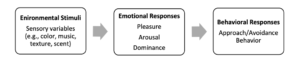
Figure 1: SOR Model (Mehrabian & Russel, 1974)
The SOR theory contains several postulates. First, different stimuli may evoke varying responses based on their sensory characteristics (Tan, 2019). This is particularly relevant for advertisers, who can strategically design stimuli to provoke desired emotional or behavioral reactions. Conversely, a lack of understanding of the audience’s sensitivity to stimuli may lead to ineffective campaigns. Second, the same stimulus can produce different responses depending on the individual’s internal state (Tan, 2019). Third, mediating variables such as motivation or attention influence the strength and direction of the S–O–R relationship (Tan, 2019). Finally, responses may evolve over time depending on when and how stimuli are presented.
Recent research illustrates how the SOR framework can be applied to understand responses to sustainability-related advertising. For instance, Pfiffelmann et al. (2025) employed the SOR logic—combined with Signalling Theory and Self-Congruity Theory—to analyze how green employer labels act as stimuli (S) influencing potential job applicants’ internal states (O) such as perceived person-organization fit and ad credibility, which subsequently shape behavioral responses (R) like employer attractiveness. Their eye-tracking experiment showed that while the presence of a green employer label did not necessarily capture more visual attention, it significantly increased perceived fit and attractiveness for environmentally concerned individuals, demonstrating that internal cognitive and affective reactions mediate the effect of advertising stimuli on behavioral outcomes.
Understanding the S-O-R theory can guide practical applications in advertising and marketing by tailoring stimuli to elicit desired responses. The S-O-R theory is particularly useful in advertising because it helps marketers understand how different stimuli, such as advertisements, affect individuals' internal states and, subsequently, their behaviors. Then, the S-O-R theory is a valuable tool for understanding and predicting responses to stimuli. Still, its effectiveness depends on careful consideration of its aspects and conditions, as well as integration with complementary theories. For instance, Hashmi et al. (2019) showed that the impact of website quality dimensions (the stimulus) on online impulsive buying behavior (the response) is mediated by shopping values (the organism). In other words, their research demonstrated that hedonic and utilitarian values mediate the relationship between website quality dimensions and online impulsive buying behavior.
In summary, the Stimulus-Organism-Response theory is a comprehensive framework that helps explain human behavior by considering the interplay between external stimuli, internal states, and observable responses. It provides insights into the complexity of human reactions and has practical applications in understanding and influencing consumer behavior.
References
Hashmi, H., Attiq, S., & Rasheed, F. (2019). Factors affecting online impulsive buying behavior: A stimulus organism response model approach. Market Forces, 14(1).
Mehrabian, A., & Russell, J. A. (1974). An approach to environmental psychology. The MIT Press.
Tan, C. C. (2019). Intercepting stimulus-organism-response model, theory of planned behavior and theory of expectancy confirmation in the study of smartphone consumer behavior: A Thai university student perspective. Asia Pacific Journal of Religions and Cultures, 3(2), 27-48.
Woodworth, R. S. (1918). Dynamic psychology. New York, NY: Columbia University Press.